Two questions come up on almost every booking: where is this thing going to sit, and do I need permission to put it there?
The short version is that a container on your own driveway is generally straightforward, and a container on the public street generally is not.
The driveway rule
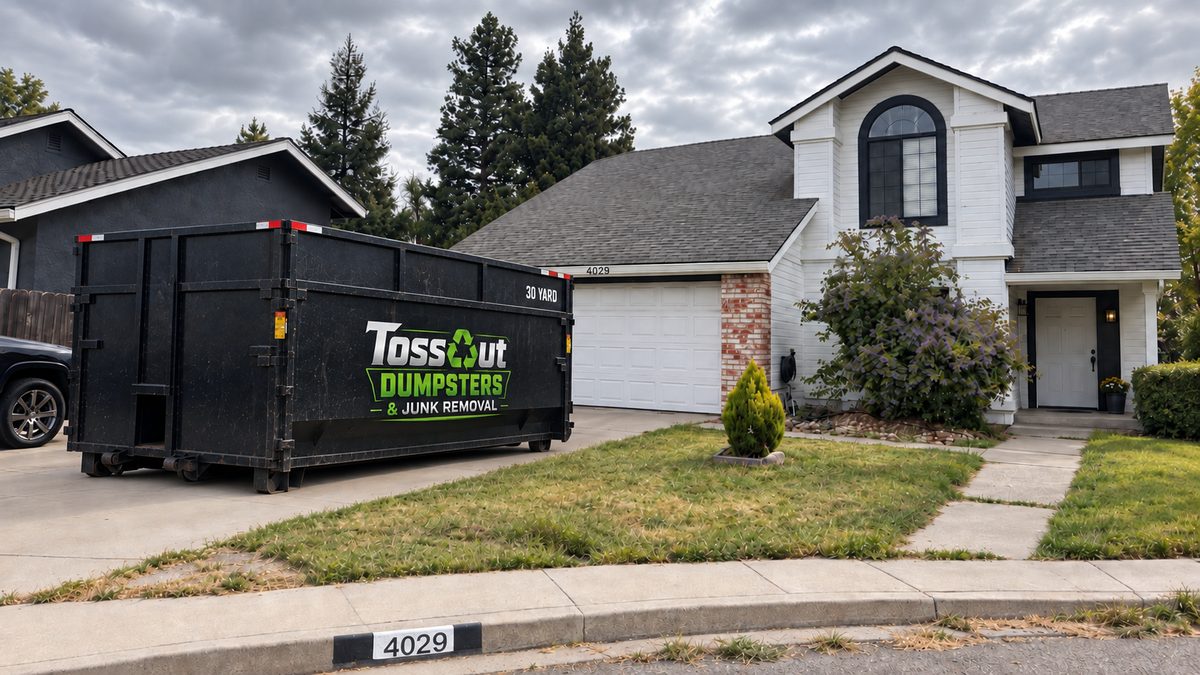
If the dumpster sits on your own property, you usually do not need a permit. That covers the large majority of the rentals we place.
If it has to sit on the public street, that becomes a question for your city, and the permit is something you file rather than something we file for you. We are the hauler, not your agent with the city.
We are also not going to tell you a permit is never needed, because it depends on your city and sometimes on your specific block, and municipal rules change without telling us. What we will do is flag it when you give us the address at booking, so you have runway to sort it out rather than discovering it on delivery day.
The HOA question, which catches more people than the city does
This is the part that surprises people, and around here it surprises a lot of them.
A great deal of the newer housing in Turlock, Manteca, Tracy, and Riverbank sits in association-managed communities, and plenty of those associations have their own container rules that are stricter than anything the city requires. An HOA can limit how long a container may sit, where it can be placed, whether it needs to be screened from the street, and whether you have to notify them first.
None of that is visible from the street, and none of it is something we can look up on your behalf. The city can have no objection at all while your HOA does.
If you live in a managed community, read your CC&Rs before you book. It takes ten minutes and it is the single most common avoidable problem in this whole process.
Will it damage my driveway?
Ask for boards and we will put them down under the container to spread the load. It is worth asking for, and it costs you nothing but the request.
Even so, it is worth telling us if your concrete is newly poured, recently resurfaced, or already cracked. We can adjust the placement or set the container further out toward the apron. Older residential concrete is common in the downtown blocks of Modesto, Turlock, Riverbank, and Oakdale, and a heads-up costs nothing.
Rural and Agricultural Properties
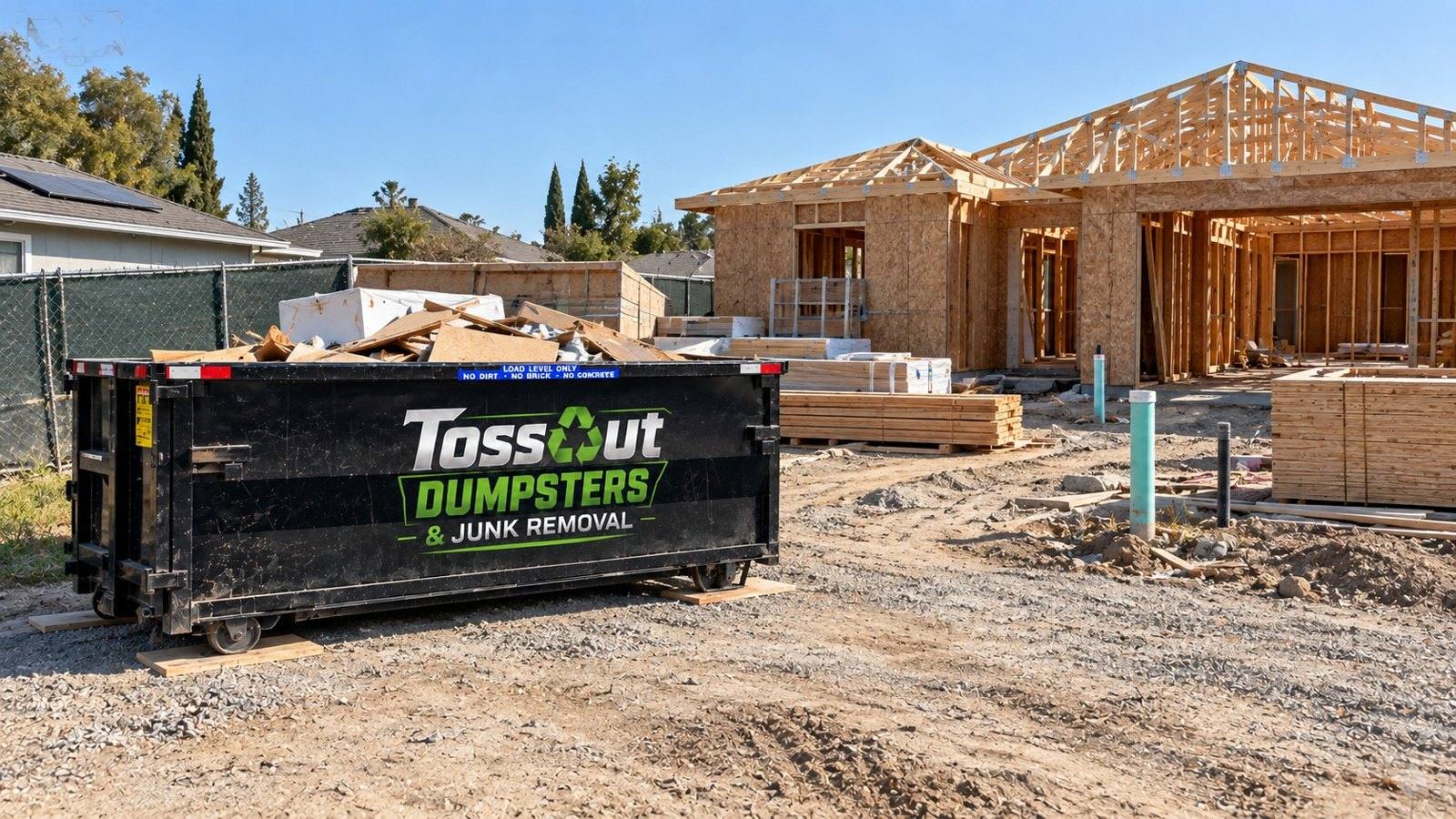
On rural and agricultural properties the concern is different. Space is rarely the constraint out on acreage. The ground is. A long gravel or dirt approach that is firm in August can be a very different surface after a rain or a round of irrigation, and a loaded roll-off truck is heavy. If we set a full container somewhere the truck cannot get back to, that becomes both of our problems.
So when you book from a rural address, tell us what the approach looks like: paved, gravel or dirt, roughly how long, whether it holds up wet, and anything on the way in like gates, cattle guards, or low branches. None of it stops us. It changes where we put the container.
Practical placement details
Leave room to open the door. Roll-offs have a swinging rear door so you can walk debris in rather than lifting everything over the side. That only works if there is clearance behind the container. Tell us if the driveway is tight and we will orient it accordingly.
Think about the garage. Where we can, we place the container so you keep access. Say something if that matters to you.
Clear the drop zone. Cars, basketball hoops, and bins need to be out of the way before the truck arrives.
Overhead matters as much as ground. Low branches and utility lines are a real constraint on the older tree-lined streets. Mention them.
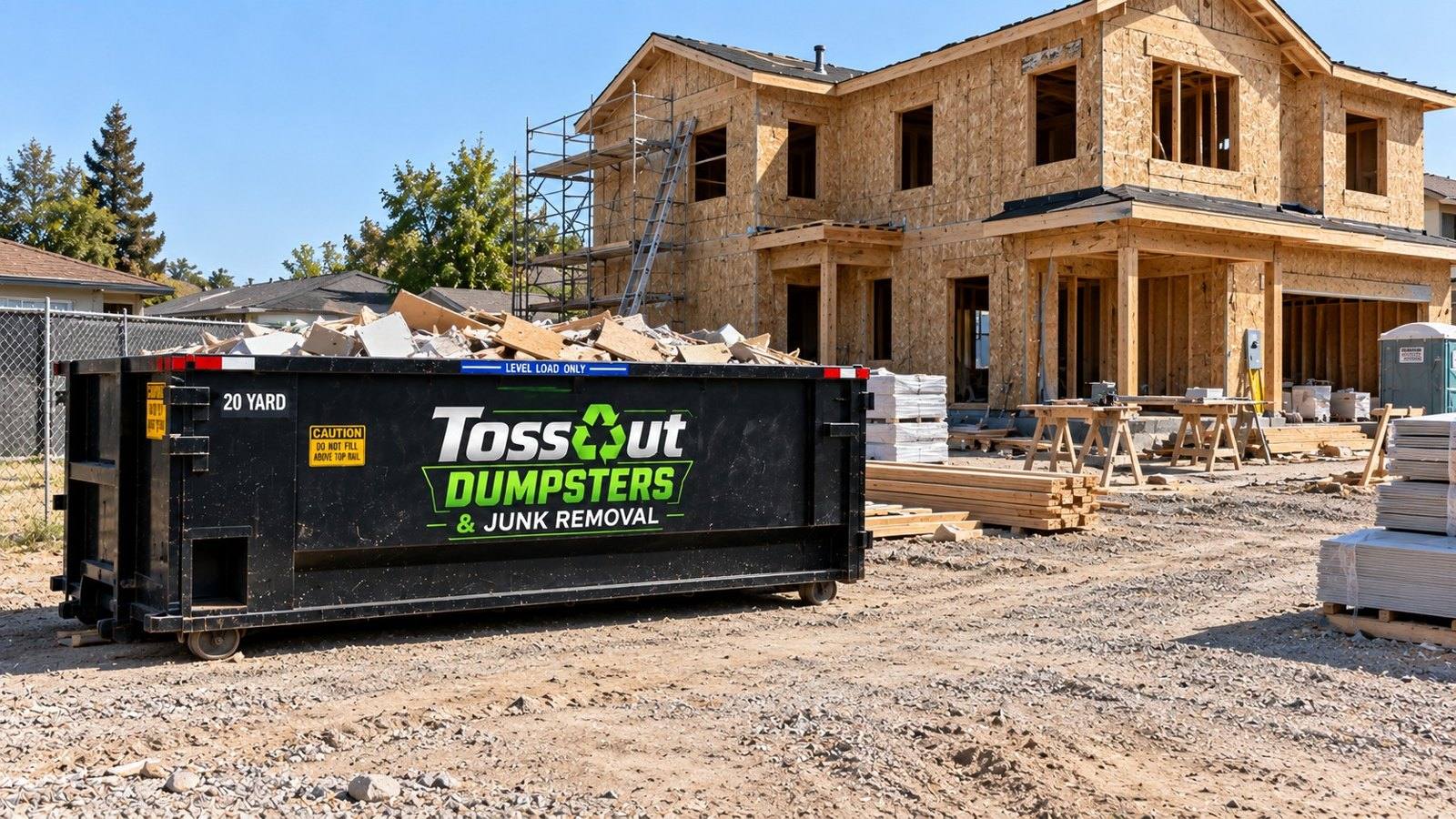
Do not overfill. Loads have to sit level with the top rail to be legally and safely transported. A container heaped above the rail cannot go, which means a return trip.
Tell us the awkward parts up front
Shared driveway, corner lot, gated property, steep approach, narrow street, mature trees, HOA. None of these are dealbreakers, and all of them are easier as a thirty-second conversation at booking than as a surprise with a truck on the street.
Call or text (209) 289-5650 with the address and what you are clearing, and we will tell you what will fit and where it can go before anything is dispatched.