

Why People Over-Order
A cubic yard is a cube three feet on each side. That is a hard thing to picture, so people translate “14 yards” into something smaller than it really is.
A 14-yard container holds roughly four to five pickup truck loads. Most single-room jobs do not come close to filling one. The garage that has been bothering you for three years is usually a 14 or a 20, not a 30.
The other reason is that debris settles and breaks down as you load it. A sofa looks like it takes half the container until somebody stands it on end. Boxes collapse. Drywall stacks flat. What looks like an overflowing pile in your driveway routinely fits in less than you would guess.
An oversized container is money spent on air. Here is each one, honestly.
The 14-Yard: One Room, One Garage, One Weekend
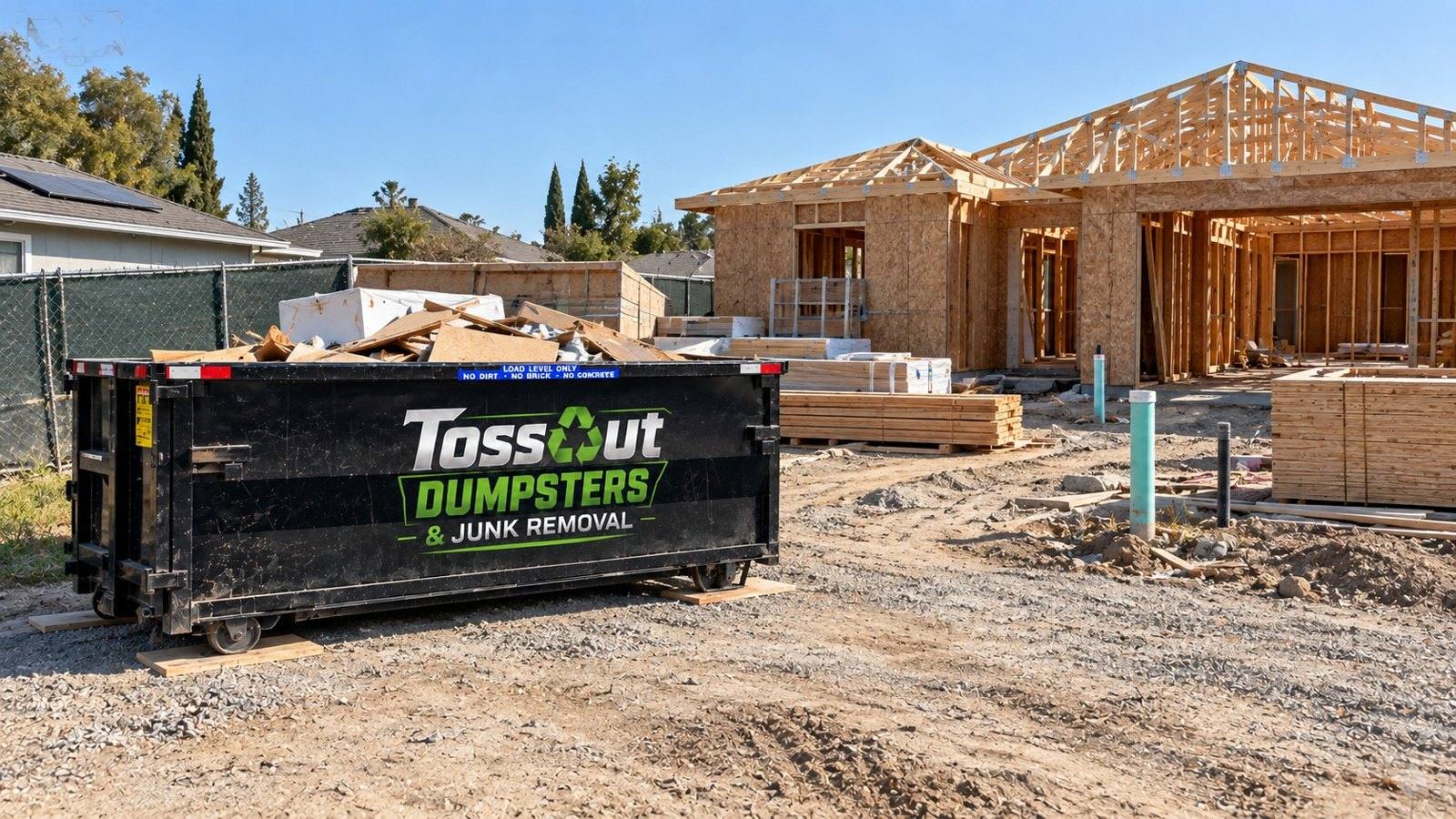
This is the container for a job with edges. One garage. One room. One shed. One yard.
A two-car garage that has been accumulating for a decade fits in a 14-yard more often than the person standing in the garage believes. So does a bathroom taken down to studs, a bedroom emptied for a rental turnover, or a deck and fence teardown from a typical suburban lot.
The mistake people make with this size is not that they order it and run out of room. It is that they skip past it, order the 20-yard, and pay for volume they never fill.
- The driveway argument. The 14-yard is 12 feet long and 4 feet tall, and that height matters more than the length does. At four feet you can lift things over the side wall. You are not building a ramp or heaving a bathroom vanity above your shoulders. For a job you are loading by hand, over several evenings, without a crew and without equipment, the low wall is the difference between a container that gets filled and one that gets half filled. On a standard driveway it also leaves room to park alongside, so the household is not displaced for a week.
- Roll-off or dump trailer. The 14-yard is the only size we run both ways. You can have it as a roll-off container or as a dump trailer, and the capacity is the same either way. Which one arrives comes down to what is on the yard and what the approach looks like. A trailer gets into some spots a roll-off truck cannot, so mention it when you book if the placement is tight or the drive is long and narrow. The 20-yard and the 30-yard are roll-off only.
- What it will not do. Be honest with yourself about scope. The 14-yard is not the container for a whole-house cleanout where you are emptying rooms rather than tidying them, a kitchen remodel where cabinets, countertops, appliances, and flooring are all coming out at once, a roof tear-off on anything larger than a small structure, or a construction job that will keep producing debris for more than a week. A second container costs more than the right container did.
The 20-Yard: The One Most Projects Actually Need
If you called us, described your project, and asked us to guess before hearing any detail, we would guess this one.
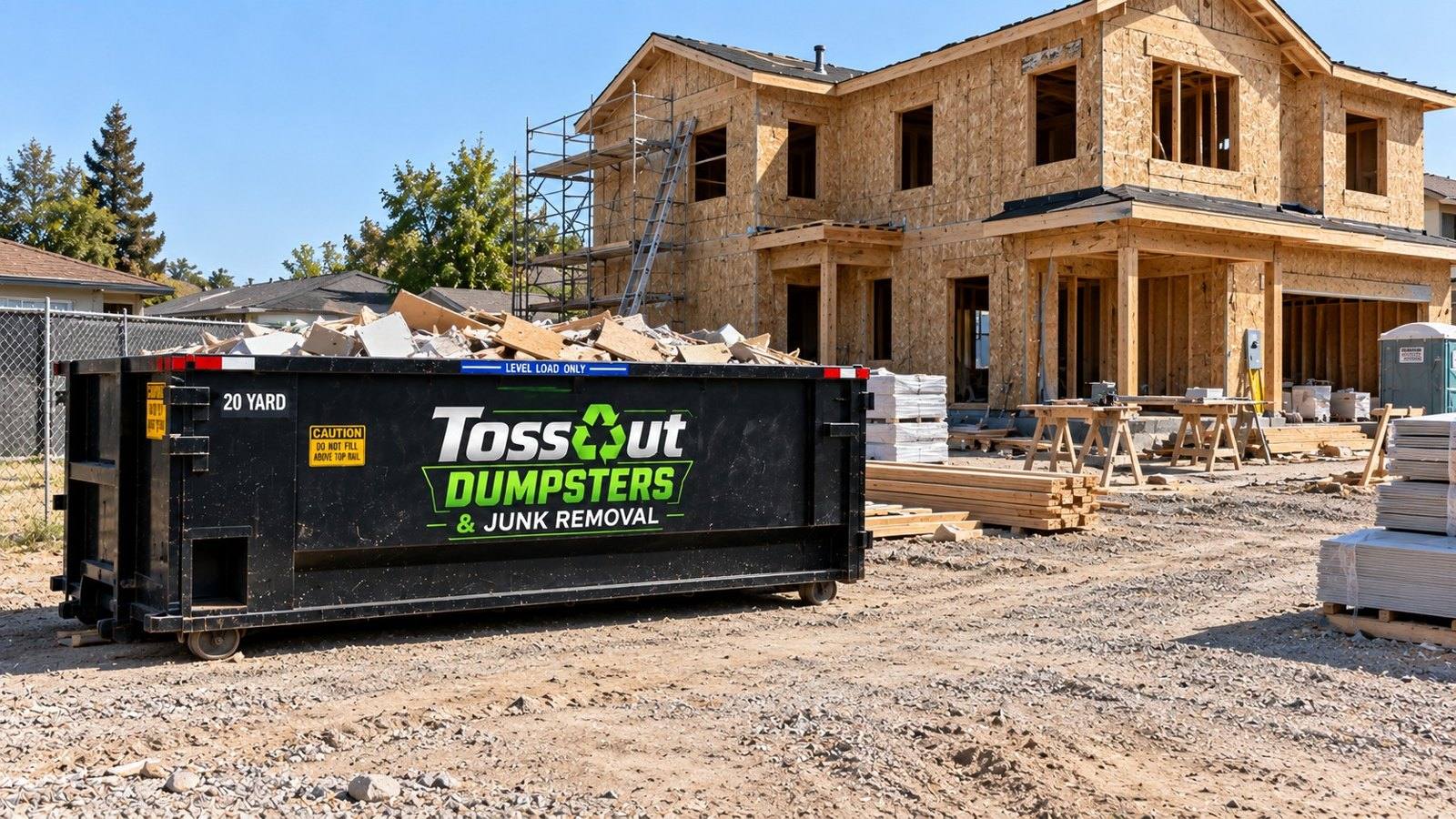
The 20-yard holds roughly six to eight pickup loads. That covers the enormous middle of what people actually rent containers for: a kitchen gutted down to the drywall, a bathroom and a bedroom in the same push, a garage that has been quietly filling since the previous owner, a move-out where the furniture is not coming with you.
It is two feet longer than the 14-yard and a foot taller. That combination is why it does so much work. You get meaningfully more volume without losing the low wall that makes hand-loading tolerable.
- Remodels are why this size exists. A remodel produces debris in waves, and the waves are bigger than people expect. Cabinets come out first and take more room than they did on the wall, because they no longer stack. Then countertops, which are heavy and awkward and do not break down. Then flooring, which is deceptively voluminous when it is pried up in pieces rather than rolled. Then drywall, then the fixtures, then the packaging from everything new that went in. A kitchen alone routinely fills two thirds of a 20-yard. Add a bathroom in the same project and you are using all of it.
- The garage problem. Fourteen feet of container on a driveway is a real object. The thing worth thinking about before delivery day is whether you still need the garage. We can usually position a 20-yard so the garage door stays reachable, but only if we know that going in. Once the container is set, moving it means bringing the truck back. Tell us on the booking call where the door is, where the cars go, and whether anybody needs to get past it, and we will place it accordingly.
The 30-Yard: Real Volume, Not Just a Bigger Box
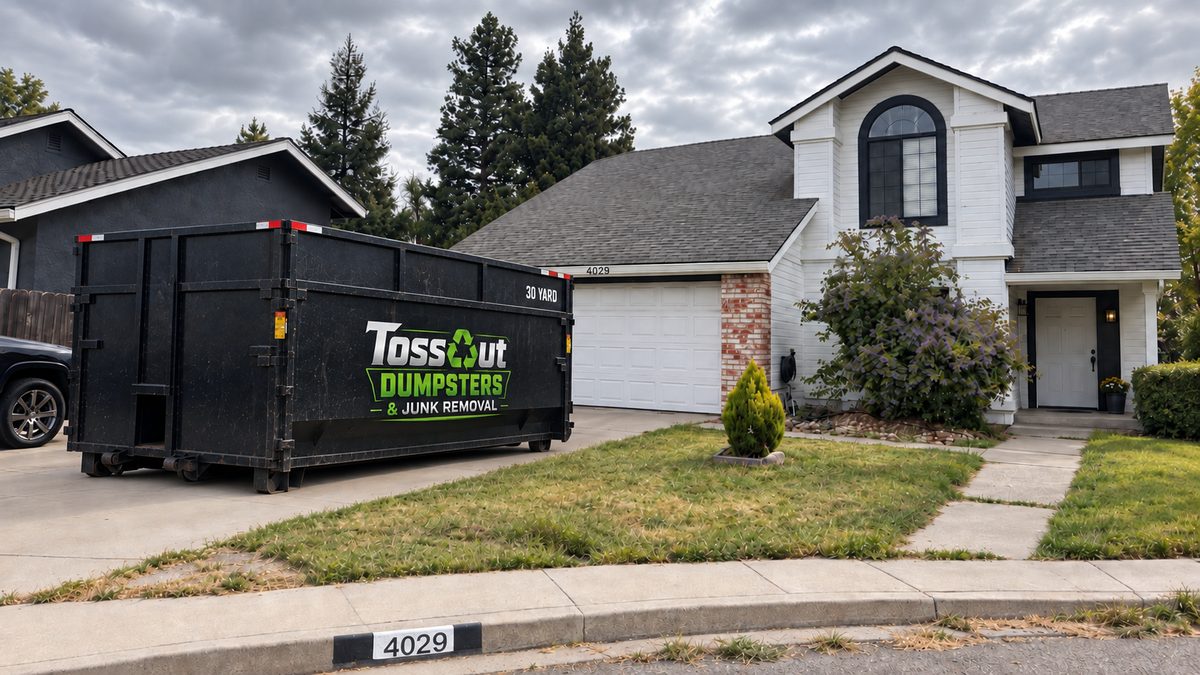
The 30-yard is not the 20-yard with extra room. It is a different kind of container for a different kind of job, and the difference is height.
Same fourteen-foot footprint. Half again the wall. That gets you ten to twelve pickup loads out of the same patch of driveway, which is why it is the right answer for whole-house cleanouts, gut renovations, and commercial clearouts. It is also why hand-loading it is a different proposition. At 7.5 feet the walls are over your head. You are not lifting a bathroom vanity over that edge on a Tuesday evening.
- The jobs this container is for. Estate and property clearing, where the volume is the whole contents of a home rather than one room’s worth. Whole-house cleanouts, where the test is whether rooms end up bare rather than tidy. Gut renovations, with multiple rooms taken to studs inside the same few weeks. Construction and commercial jobs producing debris steadily rather than in one push, where a container sitting on site for a month is the point.
- Overhead clearance is the real constraint. The thing that stops a 30-yard delivery is almost never driveway length. It is what is above the driveway. The truck raises the container higher to set it down and higher again to hook it on pickup. Mature trees leaning over the approach, low power or cable lines to the house, a carport roof, a basketball hoop on a pole. Any of those can turn a routine delivery into a call from the driver. Newer subdivisions with wide, straight, open approaches take a 30-yard without a second thought. Older established neighborhoods are worth a look before you book. Walk out and look up.
- Roofing is the exclusion specific to this size. Shingles are dense enough that a 30-yard full of tear-off reaches the truck’s legal road weight while the container still looks half empty, so roofing jobs get the 14-yard or the 20-yard on a bed-load quote instead. It catches people who reason from volume alone, which is why it is worth saying plainly.
Sizing by Project
- One room being renovated. A bathroom, a bedroom, a home office. Fixtures, flooring, drywall, and the contents. This is a 14-yard job almost every time.
- A kitchen remodel. Cabinets are bulky and awkward, and they are what pushes this past a 14. Cabinets, countertop, appliances, flooring, and backer board is a 20-yard job.
- A garage or shed clear-out. Depends entirely on how bad it is. A garage you can still park half a car in is a 14. A garage packed wall to wall and stacked to the rafters is a 20.
- A roof tear-off. Roofing material is heavy and dense rather than bulky, so the volume can mislead you. Talk to us about the square footage and the number of layers before you order.
- A whole-house cleanout. Emptying an entire property, an estate, or a long-term rental. This is a 30-yard job, and sometimes more than one load.
- A yard project. Brush, branches, fencing, and green waste that outgrew your bins. Usually a 14, occasionally a 20 if trees came down.
What Your Driveway Will Actually Take
Size is only half the question. The other half is whether the container fits where it needs to go, and whether the truck can place it and pick it back up cleanly.
Newer subdivisions generally have wide driveways, straight approaches, and enough street width for any of the three sizes. Older housing stock is a different conversation. Shorter driveways, narrower approaches, and mature trees leaning over the entrance mean a 30-yard sometimes cannot be placed even when the project calls for one.
How That Plays Out Locally
Around here that split is real. The newer tracts in Turlock, Manteca, Tracy, and Riverbank usually take a 30 without trouble. Downtown blocks in Modesto, Turlock, Riverbank, and Oakdale are tighter, and a 20 is often the practical ceiling.
That is a thirty-second conversation when you book, not a problem at the curb on delivery day. Give us the address and mention anything unusual: a shared driveway, a gate, a corner lot, a low branch, or concrete that is cracked or newly resurfaced. Ask for boards under the container and we will set them, and if the surface is a concern we can place it further out toward the apron. More detail on permits and placement.
When Two Smaller Loads Beat One Big One
Occasionally the right answer is a 14-yard twice rather than a 30-yard once. That is usually true when the project runs in two distinct stages with a gap between them, like a demolition phase followed by a build phase weeks later, or when the driveway simply will not take the larger container.
It is usually not true when you are just trying to save money. Two deliveries and two pickups cost more than one of the larger container. If the volume is genuinely there, order for it.
What the Price Covers
Delivery, your fill window, and pickup, in one number you approve before we dispatch. No per-day rate accruing in the background, no weight surcharge appearing at pickup on an ordinary household load.
Two things change the number: heavy material, quoted on a bed-load basis, and delivery out into Tuolumne or Calaveras counties, which carries a premium for the drive. Both are on the quote before you agree to anything. The pricing page has the full breakdown.
Still Not Sure?
Then do not guess. Call or text (209) 289-5650 and describe what you are looking at: the rooms involved, roughly what is coming out, and the address. We have loaded enough of these to tell you which container we would bring, and we will say so if the smaller one is genuinely enough.
If it turns out a dumpster is the wrong tool entirely, because you want it gone today or you would rather not do the lifting, we will say that too. Compare dumpster rental to junk removal if you are weighing the two.