Step One: The Phone Call
Everything gets decided here, which is why it is worth five real minutes rather than a form.
We ask three things. What is going in the container, roughly how much of it there is, and where you want it. From that we can tell you which size we would bring, what it costs, and when we can get there.
Why We Ask
The reason we ask what is going in is not curiosity. Roofing tear-off is priced on a bed-load basis rather than by container size, and it changes which container we send. Concrete and soil we do not take at all, so it is worth saying up front if the project is producing either one.
The reason we ask where it goes is that placement decides whether the delivery is routine or complicated. Driveway is simple. Street is a permit conversation. Behind a gate, on a slope, or under low trees is worth knowing about now.
You get one number covering delivery, your fill window, and pickup. You approve it before we dispatch a truck. That number is what you pay unless you change the job.
Step Two: Getting the Driveway Ready
Two things to do before the delivery window opens.
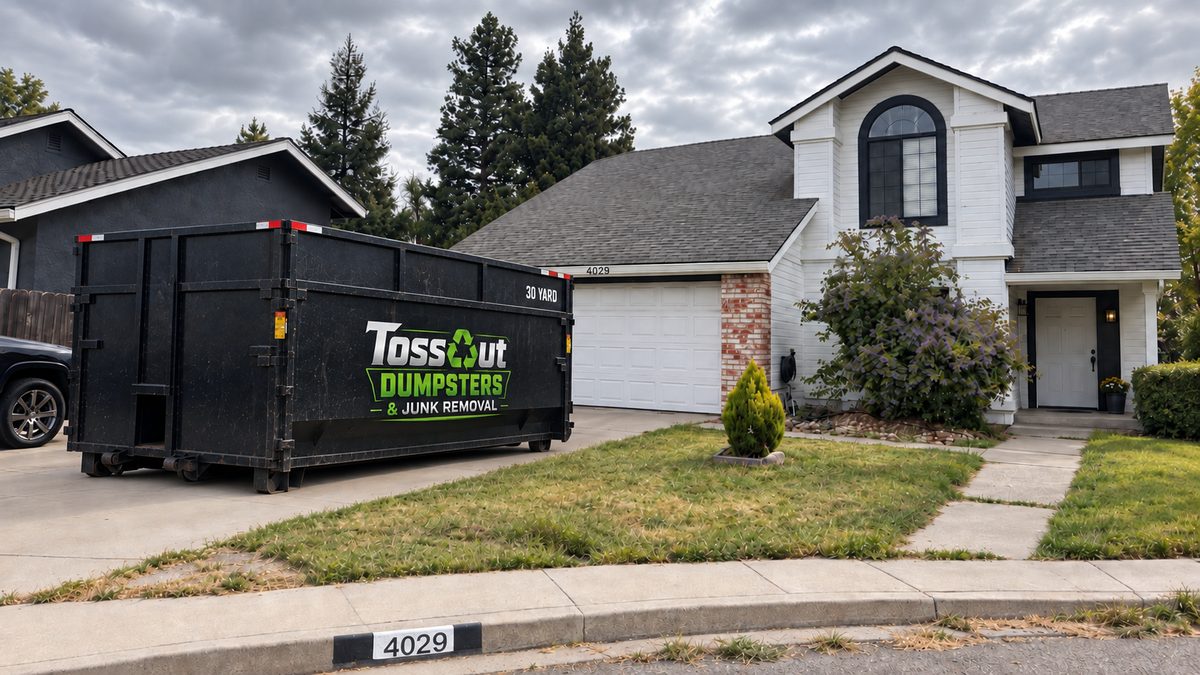
Clear the spot. The container needs roughly 22 to 24 feet of clear length depending on the size, plus room for the truck to back in straight. Move the cars out. If the container is going where the cars normally live, decide now where they are going for the week.
Look up. Overhead clearance stops more deliveries than driveway length does. The truck raises the container to set it down, and a branch or a cable line that clears a car will not clear a raised roll-off. This matters most with the 30-yard, which stands 7.5 feet tall before the truck lifts it.
If you are not sure whether your driveway works, send a photo when you book. It takes us ten seconds to look at it and saves a wasted trip.
Step Three: Delivery Day
The truck backs in, boards go down under the container if you have asked for them, and the roll-off comes off the back on rails. The whole thing takes a few minutes.
We position it so you keep garage access wherever the geometry allows, which is why it helps to have told us where the door is. Once it is set, it stays where it is until we come back for it. A loaded container cannot be repositioned by hand, so the placement decision is effectively final at that moment.
Most deliveries do not require you to be there. If the spot is clear and marked, the driver sets it and goes.
Step Four: Filling It
This is your part, and it is the reason you rented a container instead of booking a crew.
There is no clock running in the background and nobody waiting in your driveway. Load it over an evening, a weekend, or three weeks, depending on the window you booked.
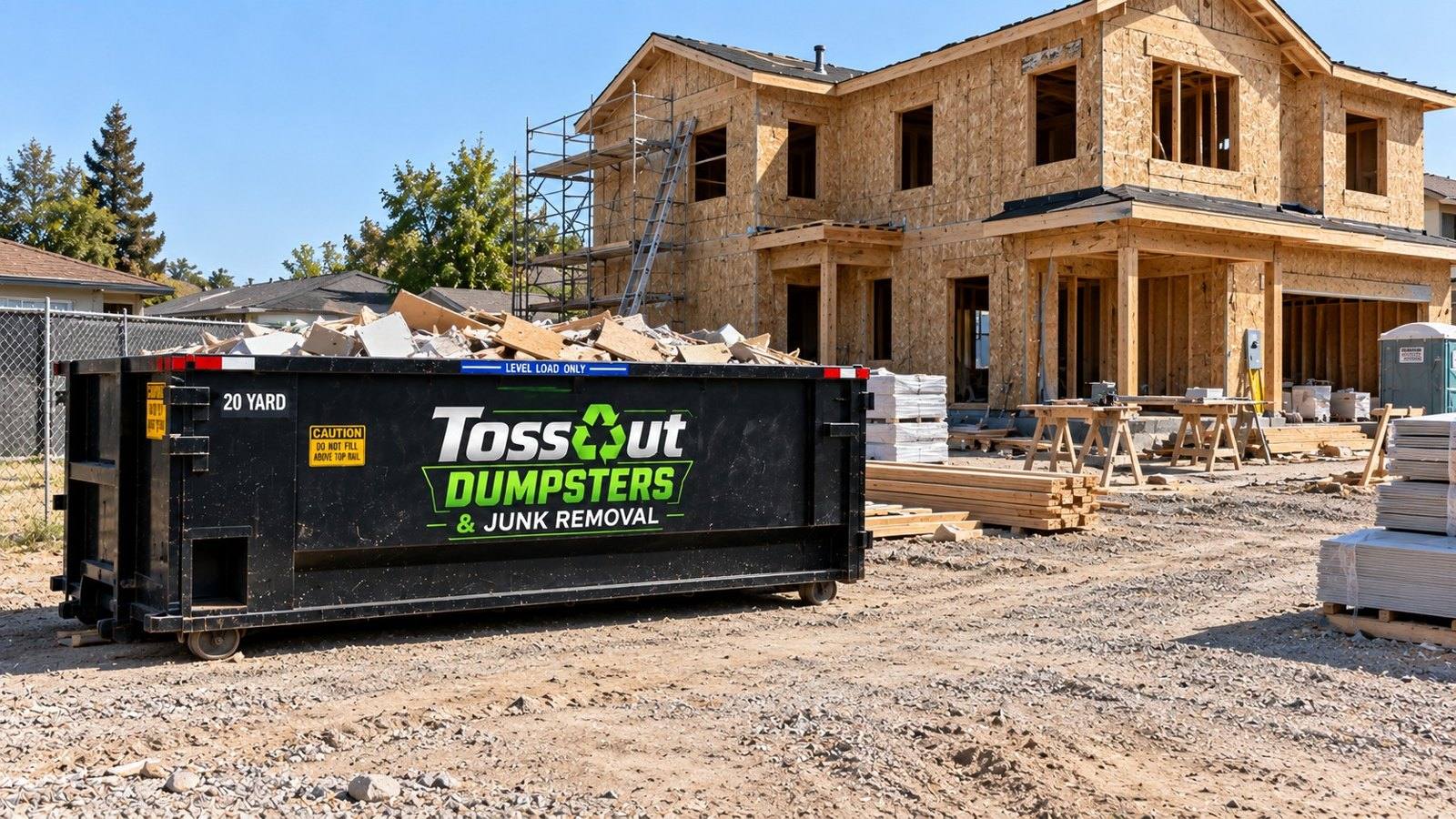
Two practical things worth knowing. Load heavy items first and low, along the floor of the container, rather than dropping them on top of a pile at the end. And keep the load level with the top rail. An overfilled container cannot legally go on the road, so anything mounded above the walls has to come off before pickup, which is a worse afternoon than stacking properly in the first place.
The accepted and restricted list covers what goes in. The short version is that almost everything does, with a small number of exceptions that are facility rules rather than ours.
Step Five: Pickup
Call or text when you are done.
If your rental window has an end date, you are already on the schedule for it. Calling early is fine and usually means the container leaves your driveway sooner rather than later.
If the project ran long, call before the window closes. We will price an extension then, on the phone, rather than adding a charge you find out about at pickup. That is the entire policy: rental periods covers how the window is set in the first place.
The truck picks it up the same way it dropped it. Any boards come up, driveway looks like it did before, and the debris is our problem from that point on.
What Makes This Different From a Crew
Worth naming plainly, because a lot of people call not yet knowing which one they want.
With a dumpster, the container is yours and the loading is yours. With junk removal, our crew arrives, loads everything, and sweeps the space before leaving, usually inside a couple of hours.
The dumpster wins when the debris appears gradually, when you want to work at your own pace, or when the volume is one material coming out over days. The crew wins when it is all there right now, when the heavy awkward items are the actual problem, or when you would rather not look at a container in your driveway for a week.
We do both, so there is nothing in it for us either way. Describe the job and we will tell you which one we would book.